For families · Seizure safety
Seizure Rescue Medicine: Nose, Cheek or Thigh?
When a child's seizure won't stop, every minute counts. Parents often ask me which way of giving rescue medicine works best. A recent trial gives a reassuring answer.
The question
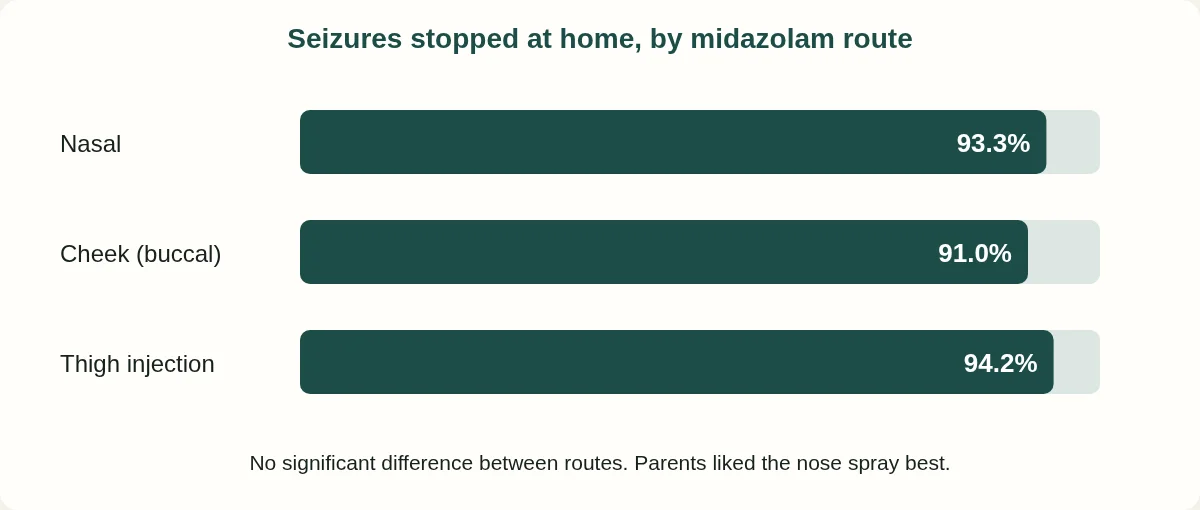
When a child's seizure won't stop, a rescue dose of midazolam can be given in the nose, inside the cheek, or as a shot in the thigh. In a 2024 randomized trial of seizures treated at home, which route worked best? [view on X]
The answer: about the same
At home, seizures stopped in 93.3% of children with nasal midazolam, 91% with cheek midazolam and 94.2% with a thigh injection. There was no significant difference between them, and no serious breathing or heart events. Parents liked the nose spray best. [view on X]
Timing matters more than route
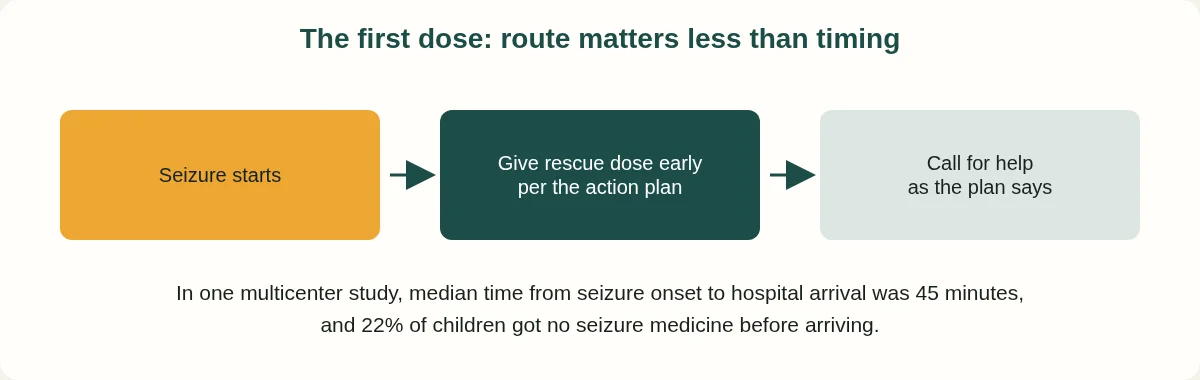
So the route matters less than the timing. In a multicenter study of children with prolonged seizures, the median time from seizure onset to hospital arrival was 45 minutes, and 22% of children got no seizure medicine before they arrived. [view on X]
In the hospital, midazolam by any route worked as well as IV lorazepam across 4 randomized trials of 326 children, and nasal midazolam was quicker to give. These were small trials, but the message is consistent: give the first dose early. [view on X]
What I do in clinic
Every rescue prescription comes with a written seizure action plan and enough doses for every place the child spends time: home, grandparents' house, school or daycare. The best route is the one the caregiver can give right away. [view on X]
A question for you
Parents and teachers: does your child's school or daycare have the seizure action plan and rescue medicine on site? Clinicians: which route do your families prefer? I'd love to hear from you on X. [view on X]
This is general information, not medical advice. Please talk with your child's doctor about their care.
Want more clear, evidence-first breakdowns on pediatric neurology and epilepsy?