EEG · For clinicians
Continuous EEG in the NICU: The 2025 ACNS Guidelines
New guidelines from the American Clinical Neurophysiology Society (ACNS) highlight the role of continuous video EEG (cEEG) in caring for newborns at risk of seizures. Here are the key points.
This piece is adapted from my thread on the guidelines. [view on X]
Why continuous EEG
The 2025 ACNS guidelines emphasize continuous EEG for diagnosing seizures in newborns. [view on X]
Accuracy matters: without cEEG, up to 85% of clinically suspected seizures might be missed. It is essential for precise diagnosis. [view on X]
Who should be monitored
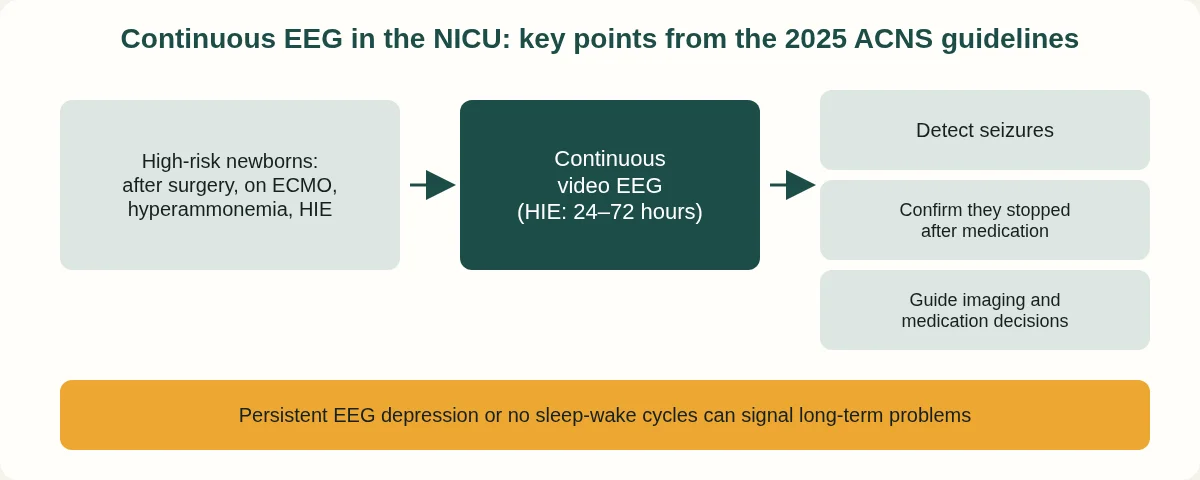
cEEG is recommended for high-risk newborns, including those after surgery, on ECMO, with hyperammonemia, or with hypoxic-ischemic encephalopathy (HIE). [view on X]
In HIE, 24 to 72 hours of monitoring helps catch subclinical seizures, which is crucial for treatment. [view on X]
How cEEG guides care
cEEG doesn't just detect seizures; it also confirms whether they have stopped after medication, which guides further treatment. [view on X]
Early EEG patterns can help predict neurodevelopmental outcomes, guiding both parents and clinicians. Persistent EEG depression or a lack of sleep-wake cycles can signal potential long-term problems. [view on X] [view on X]
Even during therapeutic hypothermia, continuous monitoring remains vital, because EEG patterns can change and recover. [view on X]
cEEG findings influence critical decisions, from imaging to medication adjustments, making care more precise. [view on X]
Worth the investment
cEEG is resource-intensive, but its benefits in the NICU justify the investment in newborn health. [view on X]
In short, the 2025 ACNS guidelines advocate cEEG to improve the management and prognosis of neonatal seizures. [view on X]
This is general information, not medical advice. Please talk with your child's doctor about their care.
Want more clear, evidence-first breakdowns on pediatric neurology and epilepsy?